“Great Product” – Sarah M. “We installed this system six months ago and have noticed our water tastes cleaner, and the chlorine smell is gone. No drop in water pressure.”
Rated 3 out of 5
“Solid Value” – John D. “Good system for city water. Installation was manageable. The sediment filter clogged a bit faster than expected in our older pipes.”
Rated 3 out of 5
“Best Purchase for the House” – Maria L. “Every faucet in our home delivers better water now. My family applauds this upgrade.”
Rated 3 out of 5
“Does the Job, but Watch Maintenance” – Kevin R. “It works, but if your water has a lot of grit, the first filter will need frequent changing. Also, make sure you register warranty.”
Rated 3 out of 5
“Strong Flow, No Fuss” – Priya K. “Even when the dishwasher and shower run simultaneously, we still have good flow. Very happy so far.”
Rated 3 out of 5
“Good Support, Some Leak Issues Early On” – Alex C. “We had a small leak during the first install, but support shipped a replacement head immediately. Fixed it and it’s been steady since.”
If you’re looking for a point-of-entry water filter that treats all the water entering your home — not just the drinking taps — the iSpring 3-stage whole house system is a compelling pick. With a 15 GPM flow rate and capability to filter out sediment, chlorine, and common organics, it offers good performance for many homes. While it’s not a total removal solution for heavy metals or microbial contaminants, it’s a solid general-purpose pre-filter/whole-house filter that balances cost, flow, and ease of maintenance.
Specs
Model / Type: iSpring 3-Stage Whole House Water Filtration System (e.g. WGB32B series)
Inlet / Outlet: 1″ NPT
Flow Rate: Up to 15 gallons per minute (GPM)
Operating Pressure: 25 psi minimum up to 80 psi maximum
Temperature Range: 40 °F to 100 °F (≈ 4.4 °C to 38 °C)
Certification : Filters are third-party tested to meet some NSF/ANSI benchmarks (per iSpring)
Pros
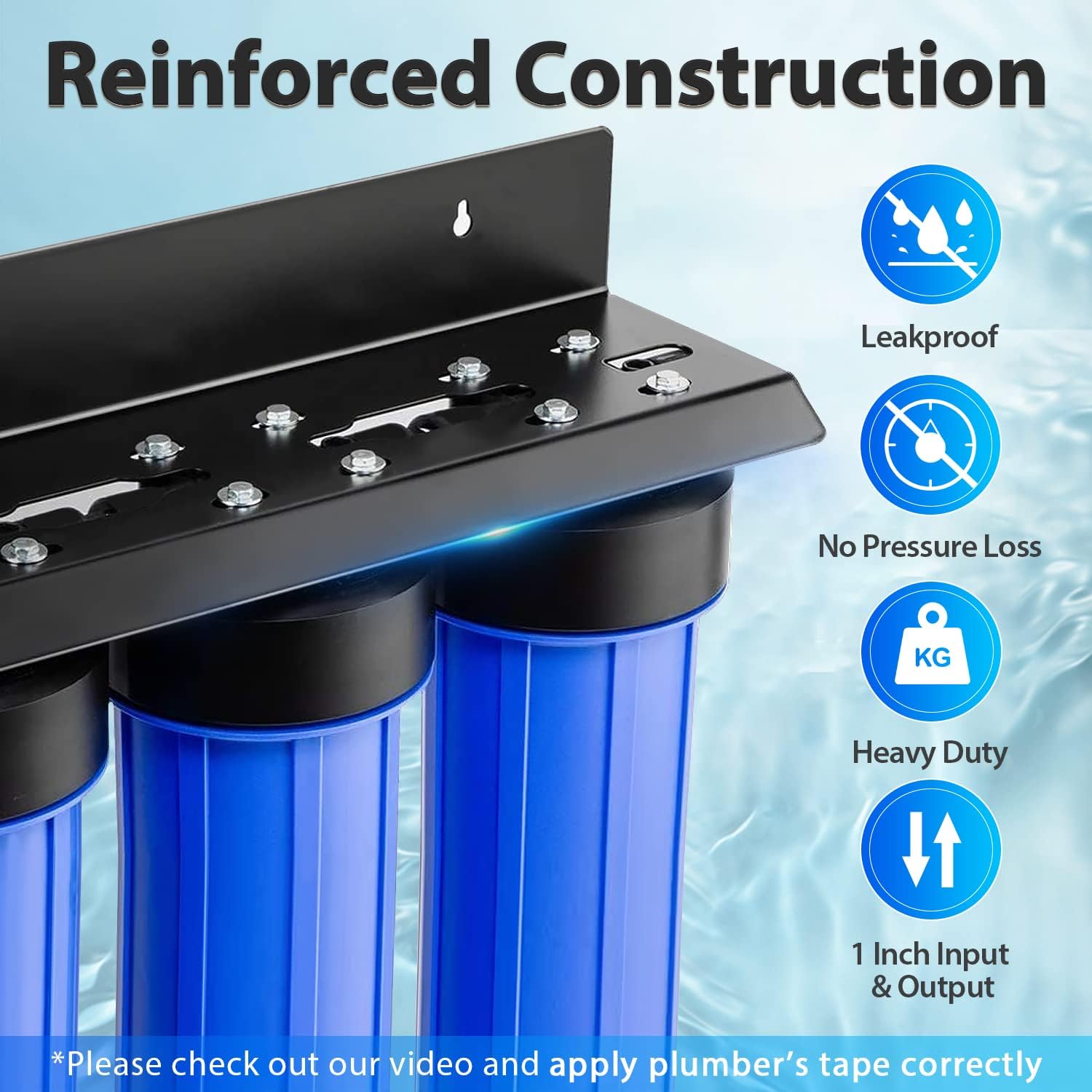
Maintains water pressure (no substantial drop) even with full household demand (rated 15 GPM)
Three-stage filtration (sediment + carbon block) handles chlorine, odor, tastes, and sediment well
Filter lifespan is generous — up to ~100,000 gallons (depending on water quality)
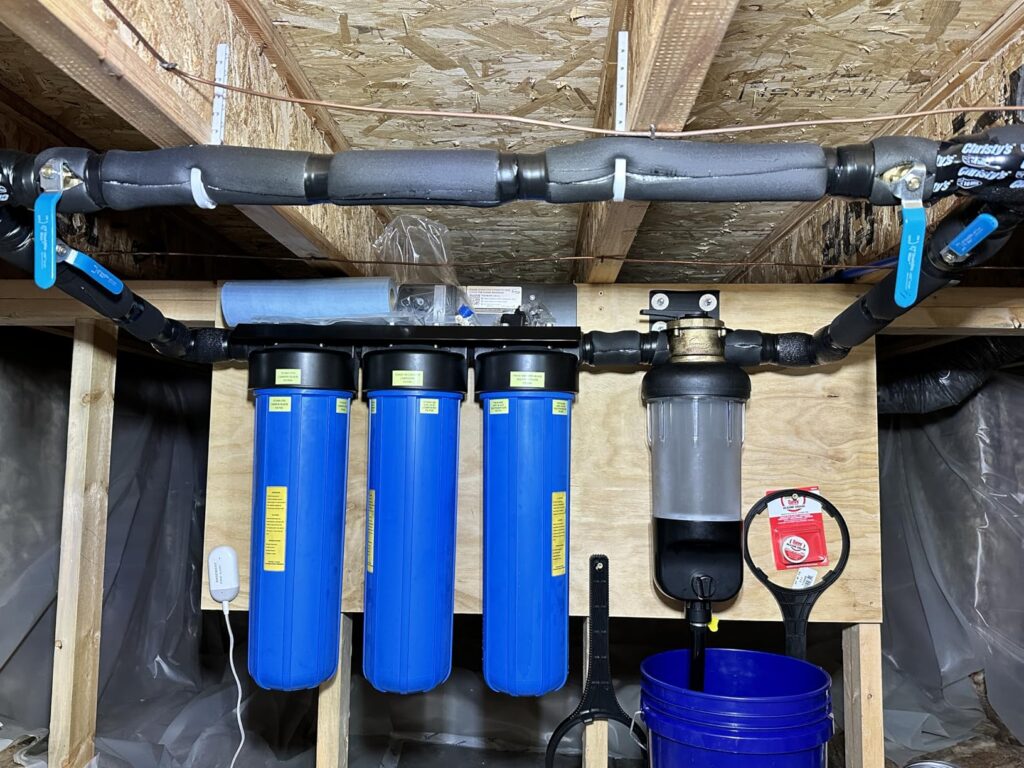
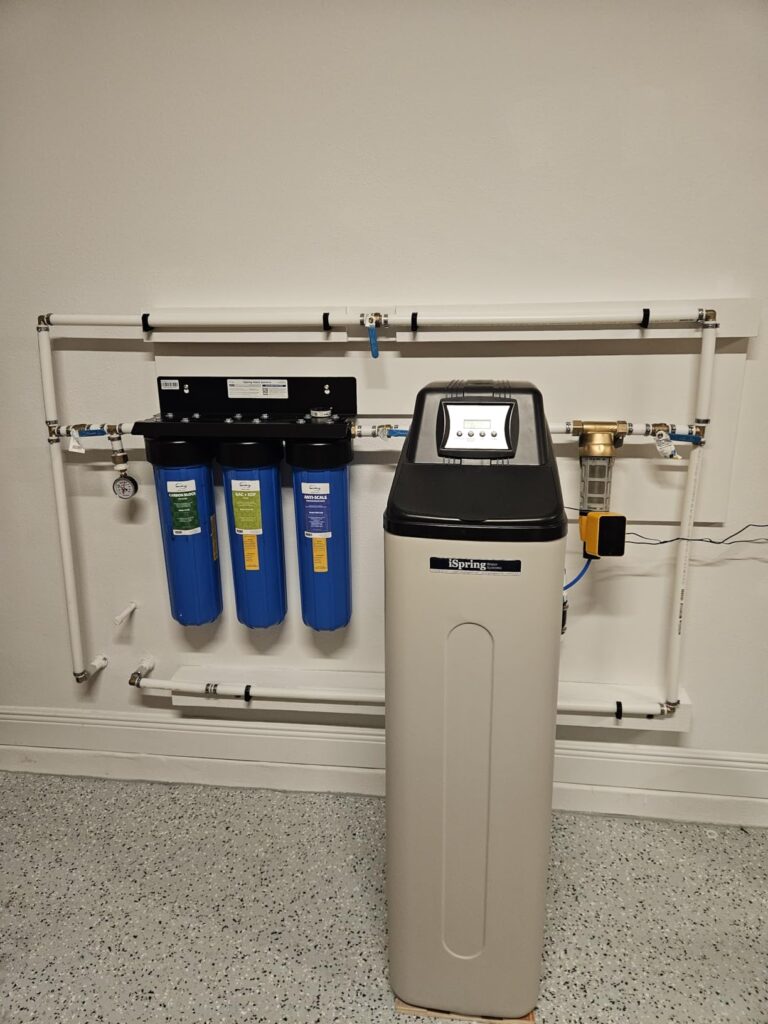
DIY-friendly installation and cartridge replacement (twist-off housings, standard 1" NPT connections)
Keeps beneficial minerals (doesn’t act like a reverse osmosis system)
Backed by responsive customer support and lifetime tech support (upon registration)
Cons
Does not remove total dissolved solids (TDS), bacteria, or viruses — it’s not a sterilization system
Sediment stage can clog faster in very dirty water; frequent maintenance might be required in such areas
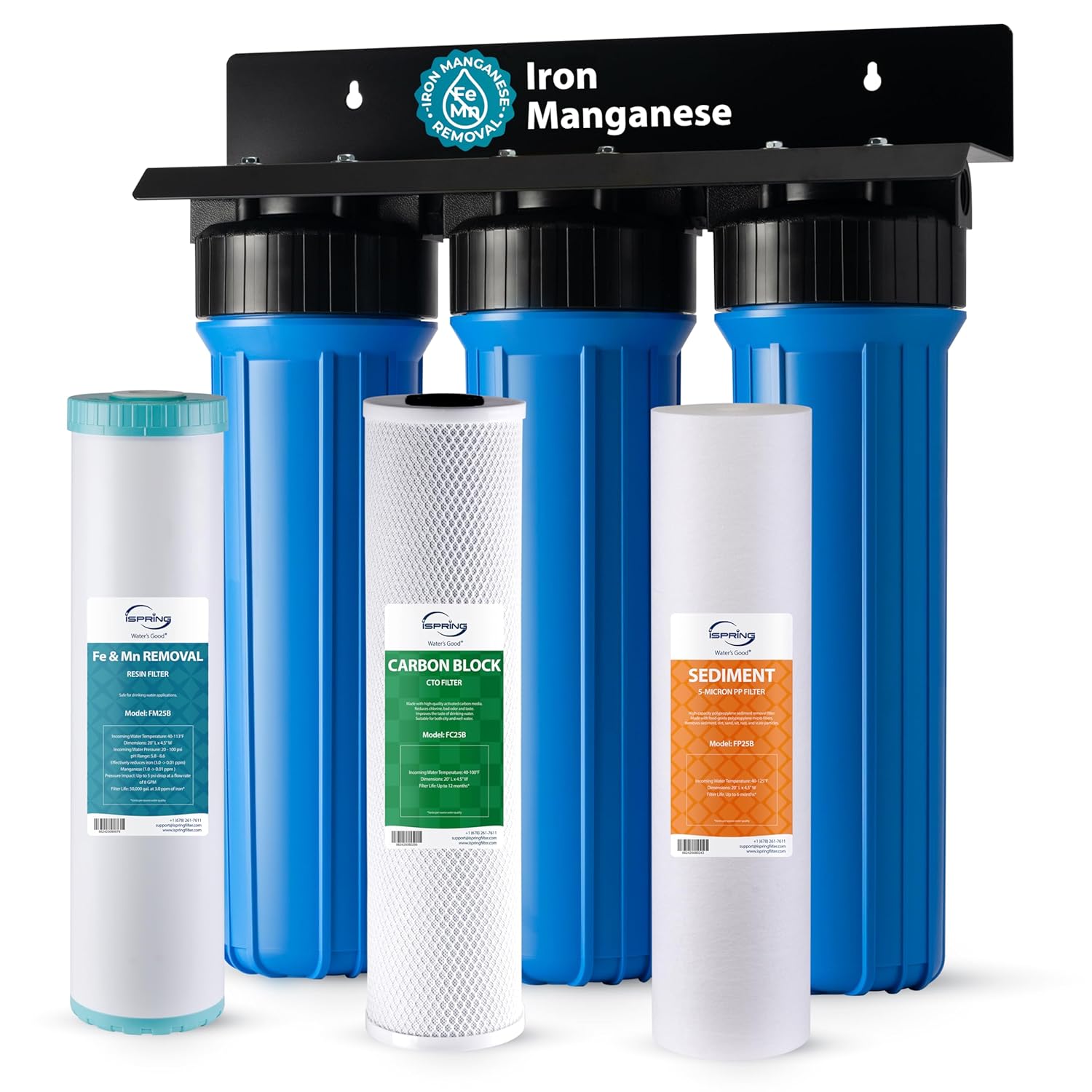
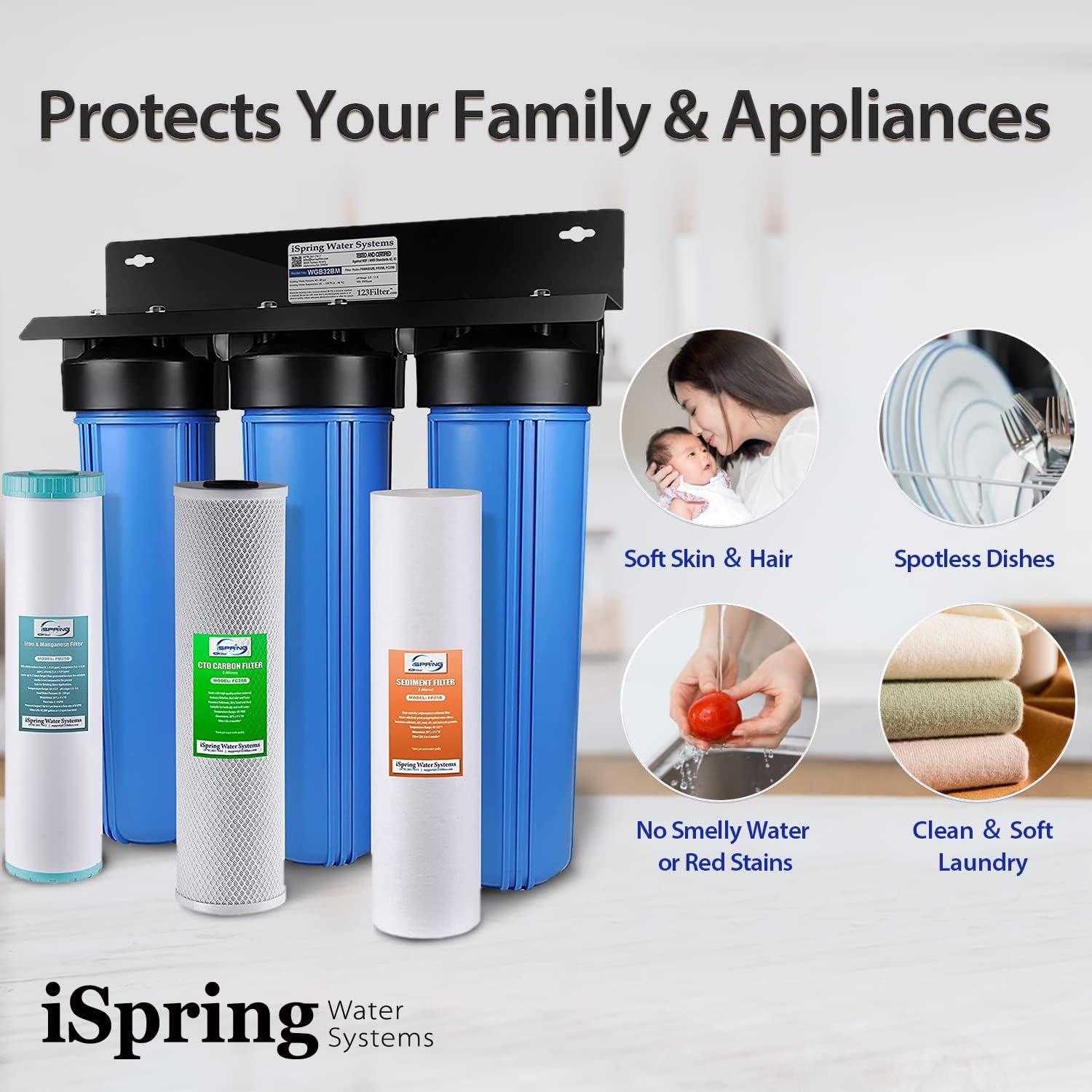
When my family moved into our new home with well water, I quickly discovered a frustrating reality: orange stains on every fixture, metallic-tasting drinking water, and that unmistakable chlorine smell from the municipal treatment. After spending hundreds on bottled water and researching filtration options, I installed the iSpring whole house water filter system WGB32BM—and within 48 hours, the transformation was remarkable. Clear water, no metallic taste, zero orange stains.
Version 1.0.0
If you’re searching for a whole house water filtration system that tackles iron, manganese, chlorine, and sediment without requiring professional installation or ongoing maintenance headaches, this iSpring 3-stage system deserves serious attention. After six months filtering every drop of water entering my home, here’s my honest assessment of whether this iron water filter whole house solution lives up to its game-changing promises.
Table of Contents
What Makes the iSpring Whole House Water Filter Different?
Unlike single-stage filters that address one problem or expensive professional systems costing $3,000-5,000, the iSpring WGB32BM uses a 3-stage whole house water filtration system targeting multiple contaminants simultaneously. According to water quality research from independent labs, the iSpring system removes iron and manganese more effectively than leading brands through specialized filtration media.
The iSpring whole house water filter addresses comprehensive water quality challenges: rusty water from iron (max 3 ppm), black stains from manganese (max 1 ppm), chlorine taste/odor, and sediment particles—all while maintaining healthy mineral content unlike reverse osmosis systems that strip everything.
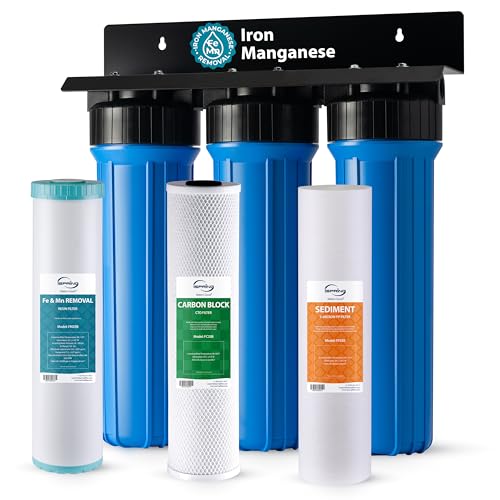
The 3-Stage Filtration Breakdown
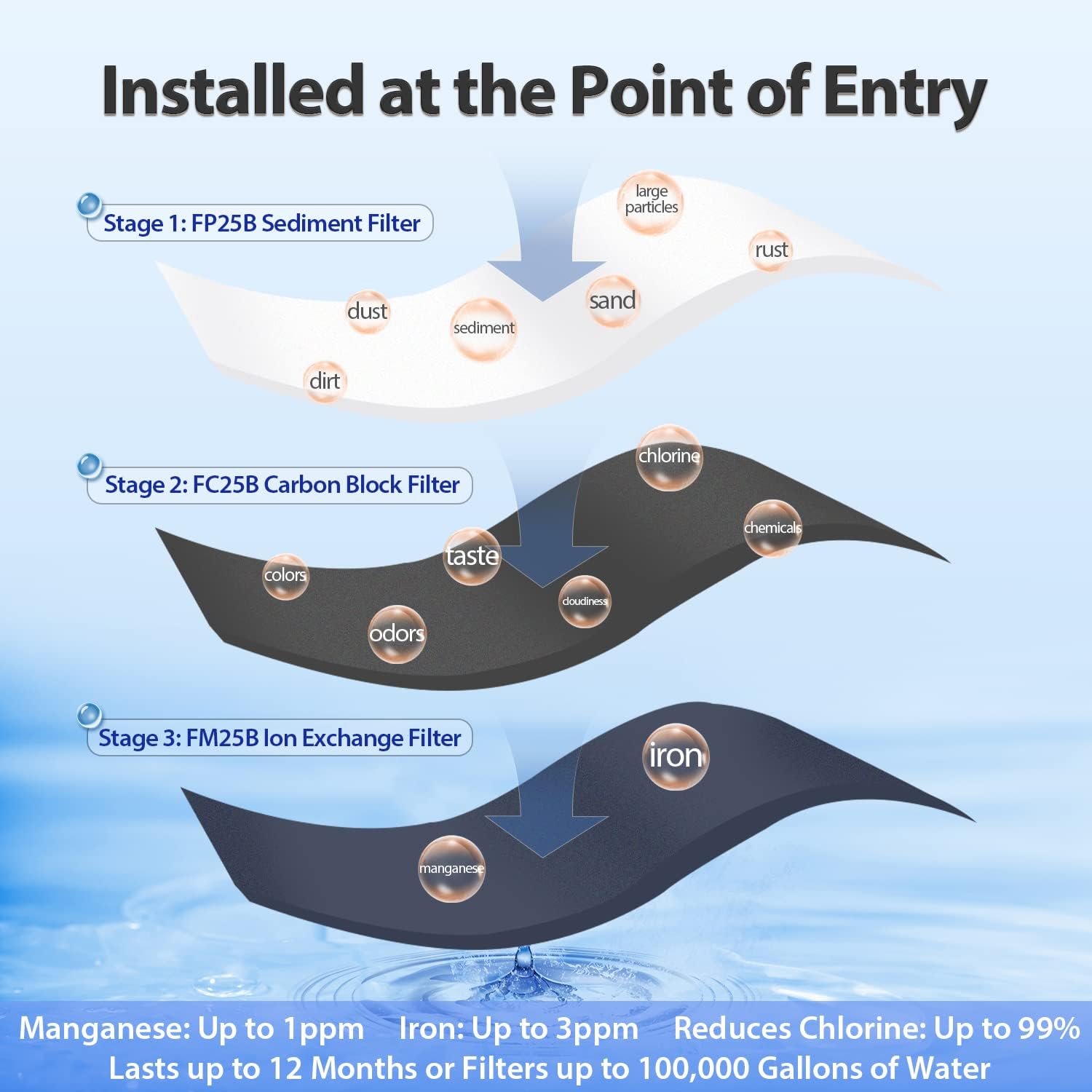
Most basic filters use 1-2 stages. The iSpring WGB32BM provides three specialized stages:
Stage 1 – 5 Micron Sediment Filter:
NSF certified polypropylene construction
Removes sand, silt, rust, dirt particles
Protects subsequent filters from clogging
Capacity: 50,000 gallons or 6-12 months
Stage 2 – CTO Carbon Block Filter:
NSF certified coconut shell carbon
Removes up to 99% of chlorine
Eliminates bad odors and organic chemicals
Improves taste dramatically
Stage 3 – Iron & Manganese Reducing Filter:
Specialized FCRC25B media
Reduces iron up to 3 ppm
Reduces manganese up to 1 ppm
Also removes lead for added protection
This comprehensive approach means one system handles what would traditionally require multiple separate filters.
My 6-Month Experience with the iSpring Whole House Water Filter
DIY Installation: Easier Than Expected
When my iSpring whole house water filter arrived, I appreciated the pre-assembled construction—the three filter housings connected with a mounting bracket ready to install. The kit included everything:
Pre-assembled “Big Blue” housing system (20″ x 4.5″ cartridges)
Complete set of 3 filter cartridges (individually wrapped for freshness)
Mounting bracket with screws
Filter housing wrench
3/4″ push-fit stainless steel hose connectors
Detailed installation manual
Installation took approximately 2-3 hours working alone. I’m moderately handy but not a professional plumber. The process involved:
Shutting off main water supply
Mounting system to wall near water line entry
Cutting into main water line
Connecting inlet/outlet with push-fit connectors
Pressurizing system and checking for leaks
The push-fit connectors eliminated the need for threading or soldering—a huge DIY advantage. If you can follow instructions and use basic tools, installation is manageable without professional help (saving $200-400).
The First 48 Hours: Immediate Transformation
After installation, I flushed the system for 10 minutes as recommended, then tested water throughout the house. The change was immediate and dramatic:
Before iSpring Installation:
Orange/rust-colored water from cold taps
Metallic taste in drinking water
Strong chlorine odor
Visible sediment when filling white bathtub
Orange stains accumulating on fixtures weekly
After iSpring Whole House Water Filter:
Crystal clear water from every tap
No metallic or chemical taste
Eliminated chlorine smell entirely
Zero visible particles
No new orange staining (existing stains cleaned off)
My wife, skeptical about the $300 investment, became an immediate believer. Her morning coffee tasted noticeably better, and showering didn’t leave that chlorine smell on skin.
Six Months Later: Long-Term Performance
After filtering thousands of gallons over six months, the iSpring whole house water filter continues performing flawlessly:
What’s Held Up Exceptionally:
Water clarity remains perfect (no degradation)
Iron and manganese removal stays consistent
Chlorine taste/odor completely eliminated
Sediment filter shows proper functioning (discolored as expected)
No pressure drop at faucets or appliances
What Required Adjustment:
Sediment filter needed replacement at 4 months (heavy well water usage)
Minor pressure fluctuation during first week (resolved after air purge)
The 3-stage water filtration system has protected my water heater, washing machine, and dishwasher from mineral buildup—a hidden value I hadn’t fully appreciated initially.
Iron and Manganese Removal: The Specialized Advantage
The Stage 3 iron and manganese reducing filter uses FCRC25B media specifically designed for these problematic minerals. According to iSpring’s independent lab testing, this filter outperforms leading brands in removing:
Iron (Ferrous and Ferric):
Reduces up to 3 ppm (parts per million)
Eliminates rust-colored water staining
Prevents metallic taste
Protects plumbing and appliances from corrosion
Manganese:
Reduces up to 1 ppm
Eliminates black/brown staining
Improves water taste
Prevents laundry discoloration
Bonus Lead Reduction: The FCRC25B media also reduces lead, providing unexpected health protection beyond iron/manganese.
For well water users or municipal systems with aging infrastructure, this specialized filtration addresses the exact problems traditional carbon filters miss.
The iSpring whole house water filter uses NSF certified components—an important distinction. NSF International independently tests and certifies that products meet specific performance standards. The iSpring system includes:
According to the National Sanitation Foundation, certified systems must undergo rigorous testing proving they remove contaminants as claimed. This independent verification provides confidence that marketing claims match actual performance.
Who Should Buy This iSpring Whole House Water Filter?
Based on six months protecting my home’s water supply, this whole house water filtration system excels for:
Well Water Users If your well water contains iron, manganese, or sediment, the iSpring WGB32BM specifically addresses these challenges. Municipal water users benefit too, but well water applications see the most dramatic improvements.
DIY Homeowners The pre-assembled construction and push-fit connectors make installation manageable for moderately handy homeowners, saving significant professional installation costs.
Families Prioritizing Health Removing chlorine, lead, iron, manganese, and sediment from every water source in your home—drinking, cooking, bathing—provides comprehensive health protection.
Anyone with Orange/Brown Staining If your sinks, toilets, and fixtures develop rust-colored stains, the iron water filter whole house solution directly addresses the source rather than just cleaning symptoms.
Budget-Conscious Quality Seekers At $300-400, the iSpring offers professional-grade filtration at DIY prices. Comparable professional installations cost $2,000-5,000 for similar performance.
Doesn’t Remove Hardness (TDS) The iSpring whole house water filter maintains healthy minerals, meaning it doesn’t soften water. If your TDS exceeds 300 ppm, iSpring recommends adding a water softener before this system.
Filter Replacement Costs Replacement filters cost approximately $80-120 annually depending on water quality and usage. Budget for this ongoing expense:
Sediment filter: Every 6-12 months (~$15)
Carbon block filters: Every 12 months (~$30-40 each)
Iron/manganese filter: Every 12 months (~$40-50)
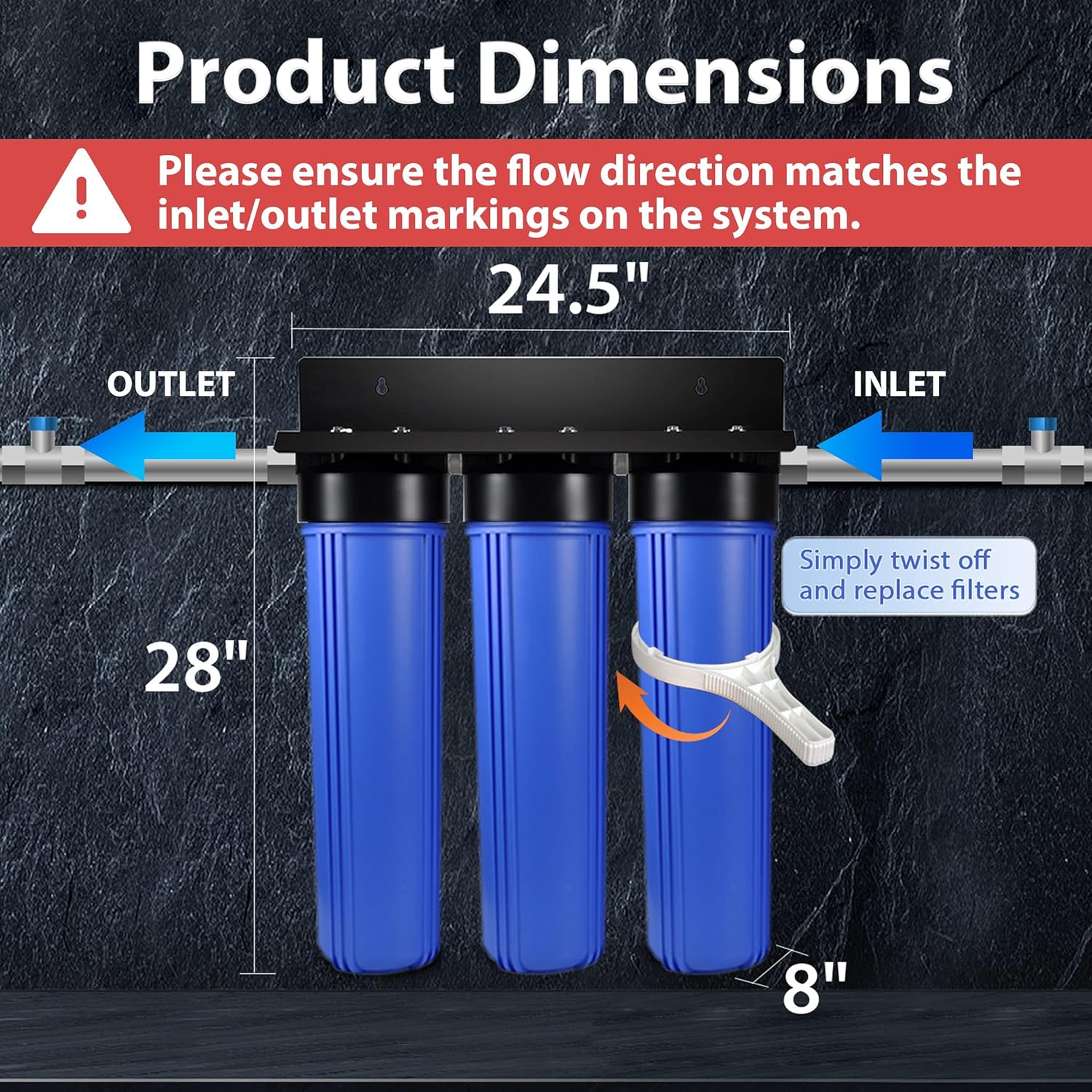
Requires Space The 20″ Big Blue housings measure approximately 24″ wide x 28″ tall x 8″ deep. Ensure adequate wall space near your main water line entry point.
Not for High Iron Levels If your iron exceeds 3 ppm or manganese exceeds 1 ppm, this system will underperform. Test your water first and consider the iSpring FC15B shock chlorination system for higher concentrations.
Pressure Drop Possible While minimal, adding any whole house filtration reduces water pressure slightly (typically 5-10 psi). Homes with already-low pressure (under 40 psi) might notice reduced flow.
Filter Replacement: Maintenance You Can Handle
One concern before purchasing: would filter changes require professional service? Six months in, I can confidently say filter replacement is DIY-friendly:
How to Change Filters:
Shut off water supply before filter
Relieve pressure using relief button
Use included wrench to unscrew housing
Remove old filter, clean housing
Insert new filter, reassemble
Pressurize and check for leaks
The entire process takes 15-20 minutes per housing. The clear housings let you visually monitor filter condition—the sediment filter turns brown, signaling replacement time.
iSpring sells replacement filter sets (F3WGB32BM) containing all three filters for convenient ordering. Subscribe & Save on Amazon provides 15% discounts, reducing annual costs.
How the iSpring Whole House Water Filter Compares
iSpring vs. Aquasana Whole House Systems
Aquasana offers popular whole house systems at $900-1,500. While they provide longer warranties and higher flow rates, the iSpring delivers 80% of performance at 30% of cost. For most residential applications, iSpring represents better value.
iSpring WGB32BM vs. Basic WGB32B
iSpring offers a cheaper WGB32B model ($200-250) with two carbon blocks instead of the iron/manganese filter. Choose WGB32BM if you have iron/manganese issues; choose WGB32B if you only need sediment and chlorine removal.
iSpring vs. Professional Installation Systems
Professional whole-house systems installed by contractors cost $2,000-5,000 including labor. They may include warranties and ongoing service, but the iSpring provides similar filtration technology at DIY prices with lifetime technical support from Atlanta-based team.
The Verdict: Outstanding Value for Comprehensive Filtration
After six months filtering every gallon entering my home, the iSpring whole house water filter has exceeded expectations. It solved my iron staining problem, eliminated chlorine taste/odor, and protects appliances from mineral damage—all for less than what I was spending annually on bottled water.
Buy this iSpring WGB32BM if:
You have well water with iron/manganese (under 3ppm/1ppm)
You want to remove chlorine and sediment from all household water
You’re comfortable with DIY installation (saves $200-400)
Budget under $500 is important
You value NSF certified components
Consider alternatives if:
Your iron exceeds 3 ppm or manganese exceeds 1 ppm
You need water softening (TDS reduction)
You want a maintenance-free system (no filter changes)
You prefer professional installation with warranties
You have extremely low water pressure already
The iSpring whole house water filter represents smart home improvement—addressing real water quality problems with proven technology at accessible pricing. While not perfect for every situation, it delivers exceptional value for homeowners seeking comprehensive filtration without premium costs.
Frequently Asked Questions About iSpring Whole House Water Filters
Q: How often do I need to replace filters in the iSpring whole house water filter? A: The sediment filter typically lasts 6-12 months, while carbon and iron/manganese filters last 12 months. Heavy usage or poor source water quality may require more frequent changes. Visual inspection through clear housings helps determine timing.
Q: Will the iSpring WGB32BM reduce water pressure in my home? A: Minimal pressure drop occurs (5-10 psi typically). The 3/4″ inlet/outlet and large 4.5″ x 20″ filter cartridges minimize resistance. If your pressure is already low (under 40 psi), consider the 1″ inlet/outlet WGB31BM model.
Q: Can the iSpring whole house water filter remove bacteria or viruses? A: No, the WGB32BM is not designed for microbiological contaminants. For bacteria/virus removal, add an iSpring UV filter after this system or consider their well water chlorination system. Always test well water for bacterial contamination.
Q: How much does it cost to operate the iSpring whole house water filter annually? A: Replacement filters cost approximately $80-120 annually: sediment filter ($15), two carbon blocks ($30-40 each), and iron/manganese filter ($40-50). No electricity costs—purely mechanical filtration.
Q: Will this remove the sulfur “rotten egg” smell from well water? A: The carbon filters help reduce hydrogen sulfide (sulfur smell), but heavy concentrations require specialized treatment. For strong sulfur odors, consider iSpring’s dedicated hydrogen sulfide removal systems.
Q: Can I install the iSpring whole house water filter myself without plumbing experience? A: If you’re comfortable with basic tools and following instructions, yes. The push-fit connectors eliminate complex plumbing. However, if you’ve never worked with water lines, hiring a handyman for 1-2 hours ensures proper installation and prevents leaks.
Q: Does the iSpring WGB32BM work with both well water and city water? A: Yes! It’s designed for both. Well water users benefit most from iron/manganese removal, while city water users appreciate chlorine elimination. Municipal water typically has lower sediment, extending filter life.