


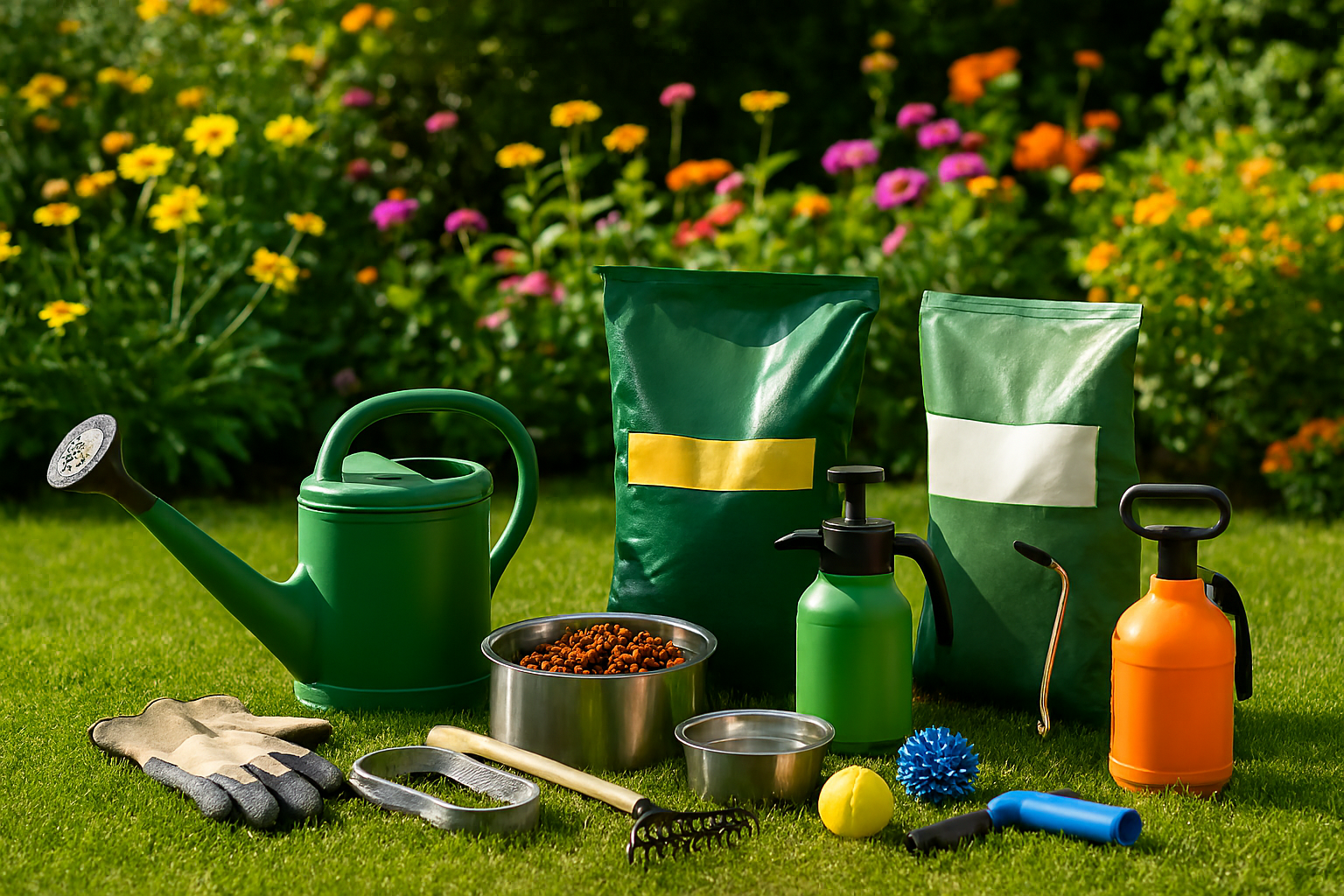
A lush, vibrant lawn doesn’t happen by accident. Behind every picture-perfect yard is a combination of proper care, timing, and most importantly, the right lawn care products. Whether you’re a new homeowner looking to establish a healthy lawn or a seasoned gardener wanting to elevate your yard’s appearance, using quality lawn maintenance products makes the difference between mediocre grass and a carpet-like lawn that becomes the envy of your neighborhood.
The lawn care industry offers thousands of products, from fertilizers and weed killers to soil amendments and specialized tools. This can feel overwhelming when you’re standing in the garden center aisle trying to decide what your lawn actually needs. The good news? You don’t need dozens of products to achieve professional results. With these 10 essential lawn care products, you’ll have everything necessary to create and maintain a thick, green, healthy lawn throughout the growing season.
This comprehensive guide breaks down the must-have products that address every aspect of lawn health – from feeding the soil to controlling weeds, managing pests, and maintaining proper grass height. Let’s transform your lawn into the outdoor space you’ve always wanted.
Understanding Your Lawn’s Basic Needs
Before diving into specific products, it’s important to understand what your lawn needs to thrive. Healthy grass requires six fundamental elements: proper nutrients, adequate water, appropriate pH levels, weed control, pest management, and regular maintenance. Each product in this guide addresses one or more of these needs.
Different grass types have varying requirements. Cool-season grasses like Kentucky bluegrass, fescue, and ryegrass thrive in northern climates and need different care timing than warm-season grasses like Bermuda, St. Augustine, and Zoysia found in southern regions. However, the core products remain the same – only the application timing and specific formulations may vary.
The most successful lawn care approach combines these products with proper cultural practices like correct mowing height, deep but infrequent watering, and seasonal aeration. Products work best when your lawn care fundamentals are solid.
1. Complete Lawn Fertilizer: The Foundation of Healthy Grass
Fertilizer is arguably the most important lawn care product you’ll use. Grass is a heavy feeder, constantly pulling nutrients from soil. Without regular fertilization, even the best grass varieties will thin out, lose color, and become susceptible to weeds and disease.
Look for a complete fertilizer with nitrogen (N), phosphorus (P), and potassium (K) – the three numbers on fertilizer bags represent these nutrients. Nitrogen promotes green color and growth, phosphorus supports root development, and potassium strengthens grass against stress, disease, and drought.
Recommended: Scotts Turf Builder Lawn Food
This trusted fertilizer feeds grass for up to 6 weeks with a balanced nutrient blend. The granules are easy to apply with a spreader and won’t burn your lawn when used as directed. The formula includes iron for deep greening and works on all grass types. Each bag covers 15,000 square feet, making it economical for larger lawns.
The time-release formula means nutrients are available to grass roots gradually, promoting steady growth rather than rapid spurts that require more frequent mowing. Apply in early spring, late spring, summer, and fall for best results.

2. Weed and Feed Combo: Dual-Action Lawn Care
Weeds compete with grass for water, nutrients, and sunlight. A weed and feed product combines fertilizer with selective herbicide, feeding your grass while eliminating broadleaf weeds like dandelions, clover, and chickweed in one application.
Recommended: Scotts Turf Builder Weed & Feed
This powerful combination kills over 50 common lawn weeds while simultaneously feeding grass. The selective herbicide targets broadleaf weeds without harming grass when used properly. The fertilizer component promotes thick grass growth that naturally crowds out future weeds.
Apply in spring when weeds are actively growing and grass is emerging from dormancy. The granular formula applies easily with any broadcast spreader. One application provides weed control for months while feeding grass for up to 6 weeks. Safe for use on established lawns of all grass types.

3. Pre-Emergent Herbicide: Prevent Weeds Before They Start
Pre-emergent herbicides create a barrier in the soil that prevents weed seeds from germinating. This is particularly effective against crabgrass, which is difficult to control once established. Prevention is far easier than elimination.
Recommended: Prodiamine 65 WDG Pre-Emergent Herbicide
This professional-grade pre-emergent prevents crabgrass, goosegrass, foxtail, and many other annual weeds for up to 6 months with a single application. The water-dispersible granules mix easily and cover large areas efficiently. Unlike granular products, liquid application provides more precise control.
Apply in early spring before soil temperatures reach 55°F consistently – this is when crabgrass seeds begin germinating. A second application in late summer prevents fall weeds. Works on all grass types and is safe around established ornamentals.

4. Lawn Starter Fertilizer: For New Grass and Overseeding
When establishing new lawns or overseeding thin areas, regular fertilizer isn’t ideal. Starter fertilizers contain higher phosphorus levels that promote aggressive root development, helping new grass establish quickly and strongly.
Recommended: Pennington UltraGreen Starter Fertilizer
This specialized formula provides the high phosphorus content new grass needs to develop deep, strong roots. The added iron promotes quick greening, while the nitrogen supports leaf growth. The gentle formula won’t burn tender new grass seedlings.
Use when planting new grass seed, laying sod, or overseeding existing lawns. The formula helps grass establish faster, meaning less water usage and better survival rates. Apply at planting time and again 4-6 weeks later for best establishment.

5. Liquid Aerator: Loosen Compacted Soil Without Machines
Compacted soil prevents grass roots from accessing water, air, and nutrients. Traditional aeration requires renting heavy equipment. Liquid aerators offer an easier alternative by breaking down clay particles and improving soil structure chemically.
Recommended: Simple Lawn Solutions Advanced Liquid Aerator
This concentrated formula loosens compacted soil, improves water penetration, and promotes deeper root growth. The humic and fulvic acids condition soil while the surfactants help water reach root zones more effectively. Much easier than core aeration for maintaining soil health.
Apply every 2-3 months during the growing season using a hose-end sprayer. One bottle treats 32,000 square feet. Particularly effective for clay soils and high-traffic areas that compact quickly. Works on all grass types and is safe around pets and children once dry.

6. Grub Control: Protect Grass Roots from Destruction
Grubs are the larvae of various beetles (Japanese beetles, June bugs, etc.) that feed on grass roots, causing brown patches and attracting animals like skunks and raccoons that dig up lawns searching for them. Grub control is essential for long-term lawn health.
Recommended: Scotts GrubEx Season-Long Grub Killer
This preventative treatment stops grubs before they damage lawns. One application in spring or early summer provides season-long control. The formula targets grub larvae while being safe for grass, and it won’t harm earthworms or beneficial insects when used as directed.
Apply in late spring or early summer before grubs hatch and begin feeding. The active ingredient creates a barrier that eliminates grubs as they emerge. Covers 5,000 square feet per bag and works on all grass types. Water in thoroughly after application.

7. Iron Supplement: Deep Green Color Without Excessive Growth
Iron supplements deliver the deep green color everyone wants without the excessive growth that nitrogen causes. This means professional-looking grass without constant mowing. Particularly beneficial for lawns with iron deficiency (yellowing grass).
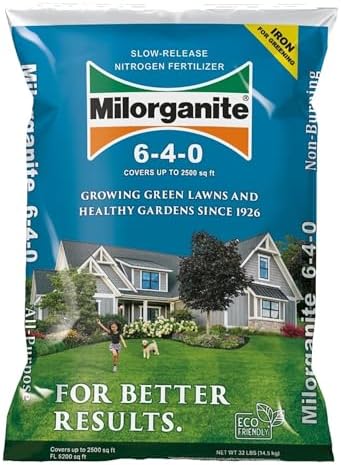
Recommended: Milorganite Organic Nitrogen Fertilizer
While technically a complete fertilizer, Milorganite is famous for its high iron content that produces incredibly deep green grass. The organic composition feeds soil microbes, improving long-term soil health. The slow-release formula won’t burn grass even in hot weather.
Apply every 6-8 weeks during the growing season for consistently dark green grass. The organic nature means it’s safe around children and pets immediately after application. Works exceptionally well on all grass types and won’t promote excessive growth or thatch buildup.
8. Grass Seed: Overseed for Thickness and Repair
Even healthy lawns benefit from annual overseeding to fill thin spots, introduce improved grass varieties, and maintain density. Quality grass seed dramatically impacts results – premium seed establishes faster and performs better than economy blends.
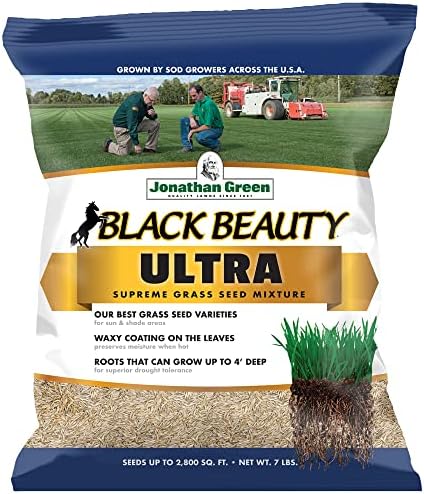
Recommended: Jonathan Green Black Beauty Ultra Grass Seed
This premium blend produces exceptionally dark green, dense turf with excellent drought tolerance. The mixture of elite grass varieties establishes quickly and self-repairs through spreading growth. The Black Beauty blend stays green longer into fall and greens up earlier in spring.
Overseed in early fall (best time) or spring using a broadcast spreader after aerating or dethatching. Keep soil consistently moist for 2-3 weeks until seedlings establish. The tall fescue blend works in sun or moderate shade and tolerates various soil types.
9. Lawn Disease Control: Prevent and Treat Fungal Problems
Lawn diseases like brown patch, dollar spot, and rust can quickly destroy grass. Fungicides prevent and treat these common problems, especially important during humid weather when fungal diseases thrive.
Recommended: BioAdvanced Fungus Control for Lawns
This systemic fungicide prevents and cures major lawn diseases for up to 30 days per application. The formula works from the inside out, protecting grass even after application. Treats up to 5,000 square feet and works fast to stop disease spread.
Apply at first sign of disease or preventatively during conditions favorable to fungal growth (hot, humid weather with heavy dew). The concentrated formula mixes with water and applies with any pump or hose-end sprayer. Safe for all grass types when used as directed.

10. Lawn Spreader: Even Application for Professional Results
Even the best lawn care products won’t work properly if applied unevenly. A quality broadcast spreader ensures consistent coverage, preventing striping, burning, and missed spots. This isn’t exactly a product that goes on your lawn, but it’s essential for applying everything else on this list.
Recommended: Scotts Elite Spreader
This heavy-duty spreader features never-flat tires, a precision rate dial, and EdgeGuard technology that prevents product from spreading onto sidewalks, driveways, and flower beds. The large hopper holds enough product to cover 20,000 square feet before refilling.
The dual-rotor design provides even coverage across a 6-foot spread pattern, and the ergonomic handle makes pushing comfortable even across large properties. Use for fertilizer, seed, ice melt, and other granular products. Built to last for years of regular use.

Bonus Products for Advanced Lawn Care
Once you’ve mastered the essentials, these additional products can take your lawn to the next level:
Soil Test Kit
Understanding your soil’s pH and nutrient levels allows you to apply exactly what your lawn needs rather than guessing. Test soil every 2-3 years.
Compost or Compost Tea
Top-dressing with quality compost adds organic matter, improves soil structure, and feeds beneficial microbes. Compost tea provides similar benefits in liquid form.
Lime or Sulfur
Adjust soil pH to optimal levels (6.0-7.0 for most grasses). Lime raises pH in acidic soil, while sulfur lowers pH in alkaline soil.
Humic Acid
This natural soil conditioner improves nutrient uptake, stimulates root growth, and helps grass tolerate stress. Works synergistically with fertilizers.
Creating Your Annual Lawn Care Schedule
Using these products effectively requires proper timing. Here’s a seasonal guide for cool-season grass lawns:
Early Spring (March-April):
- Apply pre-emergent herbicide for crabgrass prevention
- Apply grub control
- Light fertilizer application (optional)
Late Spring (May-June):
- Apply weed and feed
- Overseed thin areas with grass seed and starter fertilizer
- Apply disease control if needed
Summer (July-August):
- Apply fertilizer with iron for color without excessive growth
- Apply liquid aerator to combat compaction
- Treat any disease outbreaks promptly
- Second grub control application if needed
Fall (September-October):
- Major fertilizer application (most important feeding of the year)
- Overseed entire lawn for thickness
- Apply second weed and feed if needed
- Final liquid aerator application
Late Fall (November):
- Final fertilizer application (winterizer formula)
- Clean up leaves to prevent disease
Note: Warm-season grass schedules shift by approximately two months, with major applications happening in late spring and summer.
Smart Shopping Tips for Lawn Care Products
Get the most value from your lawn care budget with these strategies:
Calculate Your Lawn Size Accurately
Measure your lawn precisely to buy the right amount of product. Most products list coverage per bag. Buying too much wastes money; too little means inconsistent results.
Buy in Bulk When Possible
Larger bags typically cost less per square foot of coverage. If you have the storage space, buying 50-pound bags saves money versus multiple smaller bags.
Watch for Seasonal Sales
Garden centers and home improvement stores discount lawn products heavily at season’s end. Stock up in late fall for next spring’s applications.
Consider Concentrated Products
Liquid concentrates often provide better value than ready-to-use formulas, though they require mixing and spraying equipment.
Read Labels Carefully
Ensure products are labeled for your specific grass type and won’t harm desired plants. Check active ingredients to avoid redundancy.
Don’t Cheap Out on Seed
Premium grass seed costs more upfront but establishes faster, looks better, and requires less reseeding, making it more economical long-term.
Application Best Practices for Maximum Results
Even premium lawn care products won’t deliver results if applied improperly. Follow these guidelines:
Follow Label Directions Precisely
Labels list application rates, timing, and safety precautions developed through extensive testing. More isn’t better – over-application can damage grass and waste money.
Water Appropriately
Most lawn products require watering in to activate and move into the root zone. Check label directions for specific watering requirements.
Apply During Calm Weather
Wind causes uneven application and drift onto unintended areas. Apply when wind is less than 10 mph for best results.
Calibrate Your Spreader
Different products have different densities and flow characteristics. Calibrate your spreader for each product to ensure accurate application rates.
Overlap Slightly
When spreading, overlap wheel tracks by about 6 inches to prevent striping and ensure complete coverage.
Keep Products Dry
Store unused products in sealed containers in dry locations. Moisture causes clumping and reduces effectiveness.
Organic vs. Synthetic: Choosing What’s Right for You
The organic versus synthetic debate continues in lawn care. Understanding the differences helps you make informed choices:
Synthetic Products:
- Pros: Fast-acting results, predictable nutrient content, typically less expensive, targeted weed and pest control
- Cons: Can burn grass if misapplied, may harm beneficial organisms, require more frequent application
- Best for: Quick results, severe weed or pest problems, those wanting professional appearance
Organic Products:
- Pros: Improve soil health long-term, safe around children and pets, won’t burn grass, feed beneficial microbes
- Cons: Slower results, more expensive initially, less targeted pest control, require more frequent application
- Best for: Building soil health, environmentally conscious homeowners, those with pets or children
Many successful lawn care programs use a combination approach – organic fertilizers for feeding with synthetic products for targeted weed or pest problems.
Common Lawn Problems and Product Solutions
Match these products to specific lawn issues:
Yellow or Light Green Grass: Apply iron supplement or nitrogen-rich fertilizer
Thin or Patchy Lawn: Overseed with quality grass seed and starter fertilizer, apply liquid aerator for better root growth
Weeds: Use weed and feed for existing weeds, pre-emergent herbicide to prevent new ones
Brown Patches That Pull Up Easily: Check for grubs, apply grub control immediately
Circular Brown Patches During Heat: Likely fungal disease, apply fungicide
Poor Water Penetration: Apply liquid aerator to improve soil structure
Grass Growing Too Fast: Reduce nitrogen application, add iron supplement for color
Moss Growth: Indicates acidic soil or poor drainage, apply lime to raise pH and improve drainage
Environmental Responsibility in Lawn Care
Using lawn care products responsibly protects water quality and the environment:
- Never apply products before heavy rain (runoff wastes product and pollutes waterways)
- Use exactly the recommended amount – more doesn’t equal better
- Keep products away from water features, storm drains, and waterways
- Consider using organic options when synthetic alternatives aren’t necessary
- Maintain a buffer zone around water bodies
- Properly dispose of unused products and empty containers
- Leave grass clippings on the lawn (they provide free nitrogen)
- Avoid applying when grass is stressed or dormant
Building Your Lawn Care Product Arsenal
If you’re starting from scratch, prioritize purchases in this order:
First Year Essentials (Budget: $150-200):
- Broadcast spreader
- Complete lawn fertilizer (2-3 bags)
- Quality grass seed for overseeding
- Basic weed and feed
Second Year Additions (Additional $100-150): 5. Pre-emergent herbicide 6. Grub control 7. Liquid aerator
Advanced Products (Additional $100+): 8. Iron supplement or Milorganite 9. Disease control fungicide 10. Starter fertilizer for overseeding
This phased approach builds a complete lawn care system without overwhelming your budget in year one.
Achieve the Lawn You’ve Always Wanted
Creating and maintaining a healthy, beautiful lawn doesn’t require professional services or enormous expense. With these 10 essential lawn care products and proper application timing, you can achieve professional-quality results from the comfort of your own home. The key is consistency – regular applications of the right products at the right times compound into transformative results.
Remember that lawn care is a marathon, not a sprint. You won’t transform a neglected lawn overnight, but with proper products and patience, every season brings noticeable improvements. These products address every aspect of lawn health, from feeding the soil and grass to controlling weeds and pests, preventing disease, and maintaining optimal growing conditions.
Start with the basics – fertilizer, weed control, and quality seed – then expand your arsenal as you identify your lawn’s specific needs. Pay attention to how your lawn responds to different products and adjust your program accordingly. Keep notes on what works and what doesn’t to refine your approach each season.
Your lawn is an investment in your property value, outdoor enjoyment, and neighborhood appearance. With the right lawn maintenance products and commitment to regular care, you’ll create an outdoor space that makes you proud every time you pull into the driveway.
Ready to transform your lawn? Which of these lawn care products will you try first? Share your lawn care challenges and wins in the comments below, and don’t forget to bookmark this guide for reference throughout the growing season!