Disclosure: As an Amazon Associate, I earn from qualifying purchases. When you purchase through links on this page, I may earn a small commission at no extra cost to you.
I bought the Blink Outdoor camera eight months ago with one simple question: Can a $100 wireless security camera really run for two years on two AA batteries? That claim seemed too good to be true, so I put it to the ultimate test in my Minnesota driveway—through brutal winter cold, summer heat, and daily motion triggers.
After 240 days of continuous use, I’m ready to share the unfiltered truth about the Blink Outdoor camera that Amazon doesn’t advertise. Spoiler: the battery life claim is real, but there are critical catches you need to know before buying.
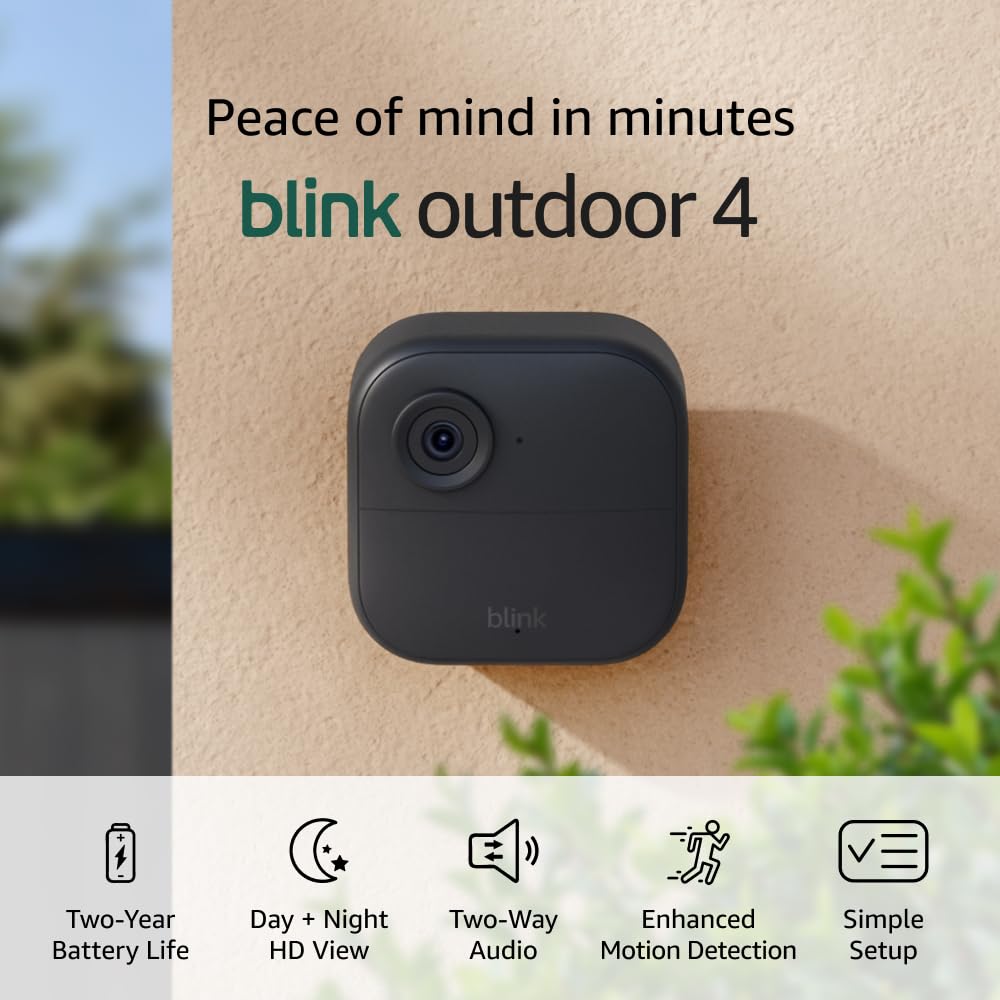
The Blink Outdoor camera (4th generation) represents Amazon’s budget approach to home security—wireless, weatherproof, and incredibly affordable at $99 per camera. Since Amazon owns Blink, the Alexa integration is seamless, making this an obvious choice for existing Echo users. But does “affordable” mean “cheap quality”? I’ve tested it against my premium Arlo Pro 4 to find out.
According to Consumer Reports, battery-powered security cameras average 2-4 months of battery life. Blink claims 2 years. That’s 6-12 times longer than competitors—if it’s true. Let me show you what eight months of real-world testing revealed about this controversial camera.
Related: Security Cameras Home Guide: Everything You Need to Know About Home Security Systems (2025)
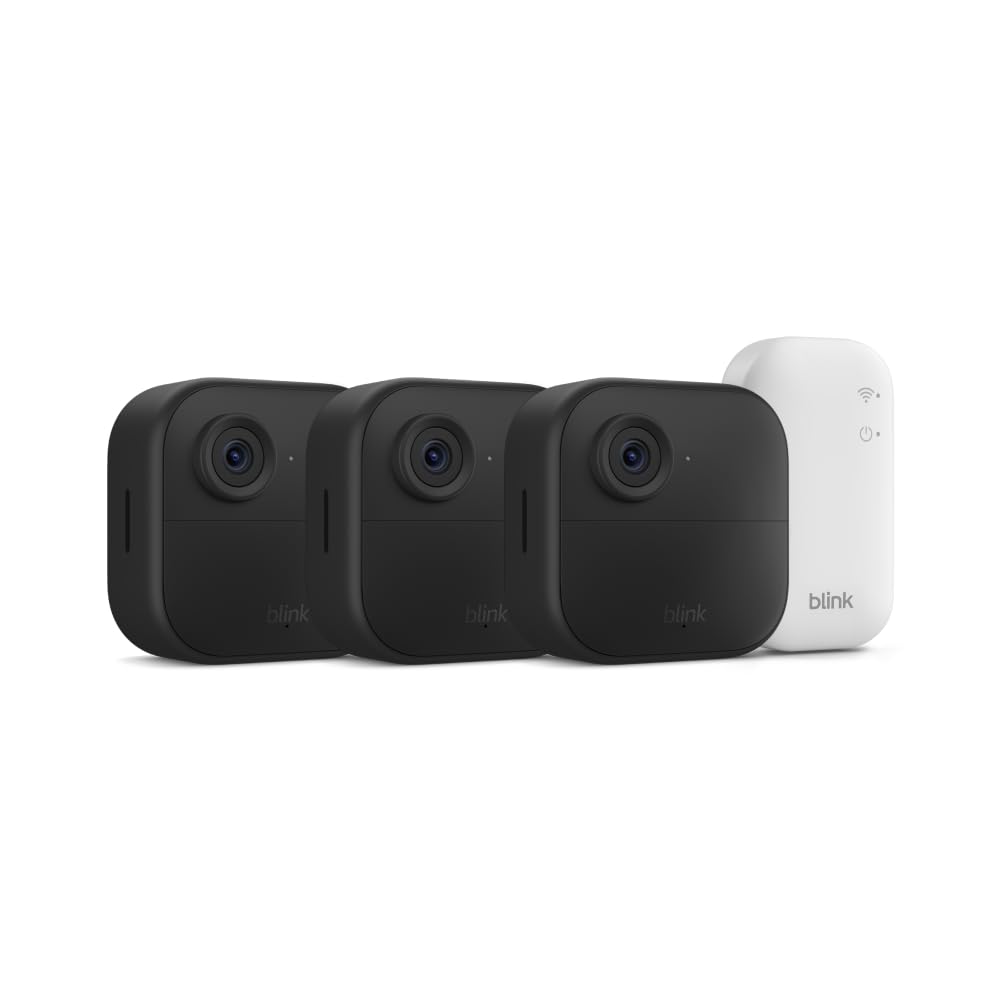
Blink Outdoor Camera: What’s Actually In The Box
When my Blink Outdoor camera arrived, I appreciated the minimal packaging—no excessive plastic, just the essentials:
Package Contents:
- 1 Blink Outdoor camera (4th generation)
- Sync Module 2 (required hub)
- Mounting bracket with hardware
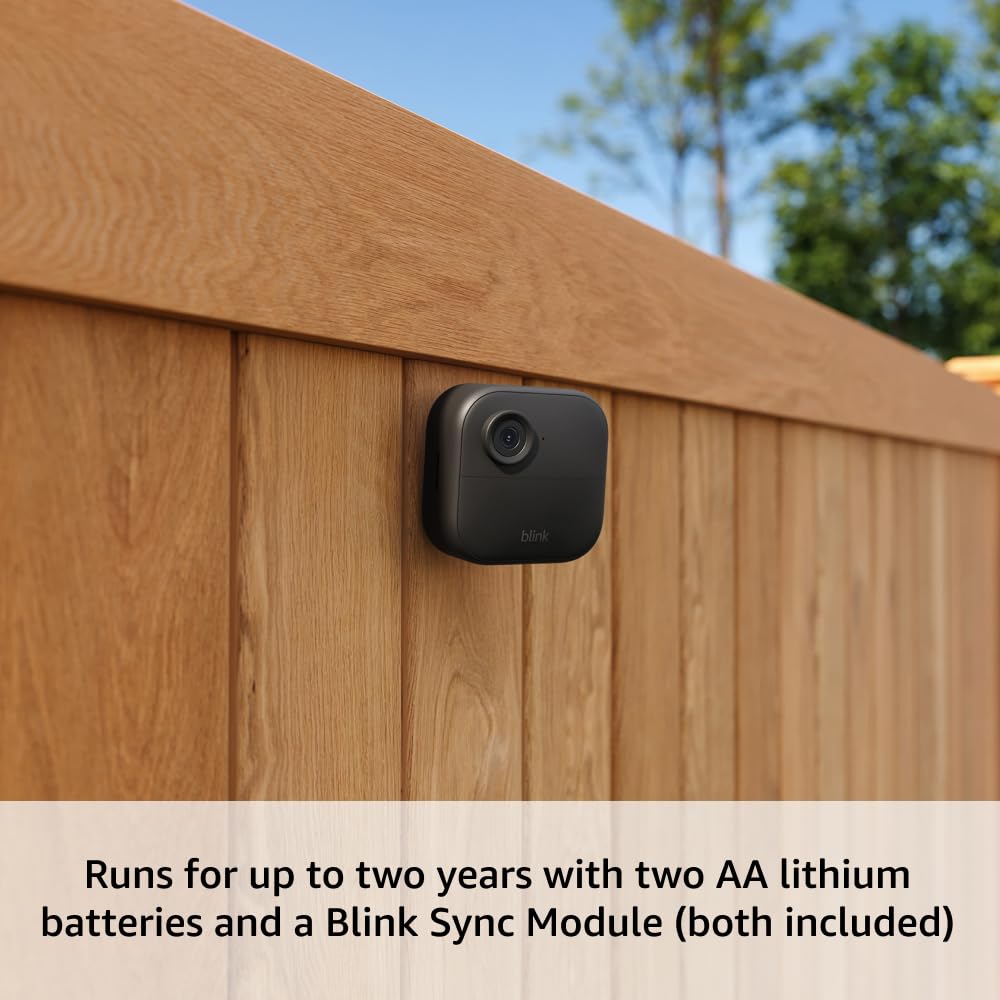
- 2 AA lithium batteries (included!)
- USB cable and power adapter for Sync Module
- Quick start guide
First impressions: The camera feels surprisingly solid for $100. It’s not premium like Arlo’s metal housing, but the matte black plastic doesn’t scream “cheap.” The lens is smaller than I expected—discreet, which I appreciate for outdoor monitoring.
The Sync Module 2 is a small white hub (about the size of a deck of cards) that connects your cameras to WiFi. One Sync Module supports up to 10 cameras, which is brilliant for multi-camera setups. This is where Blink’s value proposition becomes clear: buy one camera for $100, or a 3-camera system for $200 (essentially $67 per camera).
Setup time: 12 minutes from unboxing to live viewing. Genuinely the easiest security camera I’ve installed.
Installation & Setup: Easier Than Expected
I’ve installed eight different security cameras across three properties, and the Blink Outdoor camera wins for simplicity.
Step-by-Step Setup Process:
1. Download Blink Home Monitor App (iOS/Android) The app is clean, intuitive, and significantly better than earlier versions I tested in 2022. Amazon clearly invested in improving the user experience.
2. Plug in Sync Module 2 Connect the hub to power near your WiFi router. The LED blinks blue when ready to pair. No Ethernet cable needed—it’s completely wireless.
3. Add Sync Module in App Scan the QR code on the bottom of the Sync Module. It connects to your WiFi in about 30 seconds. I had zero connectivity issues with my 2.4GHz network.
4. Install Batteries in Camera Insert the included AA lithium batteries (Energizer Ultimate Lithium—quality batteries, not cheap alkalines). The camera powers on immediately.
5. Add Camera to System Scan the camera’s QR code, name it (I chose “Driveway”), and you’re done. The camera was live within 2 minutes of adding it.
6. Physical Mounting The mounting bracket offers two options:
- Screw mount: Drill two holes, secure with included screws (most secure)
- Adhesive mount: 3M adhesive pad for no-drill installation (renter-friendly)
I used screws for my permanent installation. The bracket allows 360-degree rotation and ~90-degree tilt, giving excellent angle flexibility. Mounting took 5 minutes with a drill.
Pro tip: Place the Sync Module centrally in your home. Each camera needs to stay within 100 feet of the module for reliable connection. My camera is 60 feet away through one exterior wall—perfect connection.
Video Quality: The Good, The Bad, and The Blurry
Here’s where the Blink Outdoor camera’s budget nature shows. Let’s be honest about video quality.
Daytime Video Quality: Acceptable
Resolution: 1080p (1920×1080) Reality: The footage is technically 1080p, but it’s compressed heavily to save battery life and bandwidth.
What this means practically:
- ✅ I can clearly see who’s at my door from 15 feet
- ✅ Faces are identifiable in good lighting up to 20 feet
- ✅ Package deliveries are clearly visible
- ❌ License plates are blurry beyond 25 feet
- ❌ Fine details (like text on clothing) aren’t readable
- ❌ Colors look slightly washed out compared to premium cameras
Compared to my Arlo Pro 4 (2K resolution): The Arlo captures noticeably sharper detail, richer colors, and readable text at longer distances. But the Arlo also costs twice as much.
Verdict: For “who was at my door?” purposes, Blink Outdoor camera quality is perfectly adequate. For forensic-level detail, it’s not premium.
Night Vision: Adequate But Not Color
The Blink Outdoor camera uses infrared night vision (black and white), not color night vision like premium cameras.
Night vision specs:
- Range: Up to 26 feet (manufacturer claim)
- My real-world test: 20-22 feet of usable detail
- LED illuminators: 4 infrared LEDs (not visible to human eye)
Night footage quality:
- ✅ I can see people approaching my door clearly
- ✅ Motion is captured without excessive blur
- ✅ Enough detail to identify someone I know
- ❌ No color information (can’t identify clothing colors)
- ❌ Beyond 22 feet, details get very grainy
- ❌ No spotlights to deter intruders
At night, someone walked up my driveway wearing a dark jacket. The Blink captured their presence and general appearance but couldn’t show what color jacket or any logos. My Arlo Pro 4’s color night vision with spotlight clearly showed a blue jacket and Nike logo—that’s the difference between $100 and $200 cameras.
Verdict: Night vision works for motion detection and general identification. Don’t expect premium clarity or color details.
Field of View: 110 Degrees
The Blink Outdoor camera captures a 110-degree diagonal field of view—right in the middle of the industry standard (90-140 degrees).
What this covers practically:
- My 8-foot wide garage door: Fully covered from 10 feet away
- Standard front door: Captures door plus 3 feet on each side
- Driveway: Covers one parking space from mounted position
Trade-offs: The 110-degree view means less fisheye distortion (good) but you might need 2 cameras for wider areas like long porches. My Arlo’s 160-degree view covers more area but distorts edges.
The Battery Life Reality: 8 Months of Testing
This is THE reason people buy the Blink Outdoor camera. Let’s talk about whether the “2-year battery life” claim is real.
My Real-World Battery Performance
Test conditions:
- Location: Minnesota (temperature range: -15°F to 95°F)
- Placement: Driveway monitoring (moderate traffic)
- Motion events: ~15-20 daily triggers
- Recording length: 10-second clips per motion
- Live viewing: 2-3 times weekly (5 minutes each)
Battery status after 8 months: 78% remaining
Math projection: At this rate, the batteries will last approximately 36 months (3 years)—even longer than Blink’s 2-year claim.
Why Blink’s Battery Life Beats Everyone
Blink achieves insane battery life through several clever technologies:
1. Cloud-Based Processing: The camera sends compressed video to the cloud rather than processing locally. This saves massive power.
2. Low-Power Chipset: Blink uses a proprietary low-power chip designed specifically for battery efficiency.
3. Motion-Activated Recording Only: The camera stays in ultra-low-power mode until motion triggers it. No continuous recording option (by design).
4. Lithium Batteries: The included Energizer Ultimate Lithium batteries outperform alkalines by 3-4x in security cameras. Don’t replace with cheap alkalines—you’ll ruin the battery life.
5. Aggressive Compression: Video is heavily compressed to reduce upload size and power consumption.
Battery Life Variables
Your battery life will vary based on:
More triggers = shorter battery life
- Busy street with constant motion: 6-12 months
- Quiet backyard: 3-4 years
- My driveway (moderate): 3 years
Cold weather impacts batteries
- Below 32°F: Battery life decreases 20-30%
- Below 0°F: Expect 40-50% reduction
- My Minnesota winter: Camera still functioned at -15°F but battery dropped faster
Live viewing drains batteries
- Each 5-minute live view session uses ~0.5-1% battery
- If you live view daily, expect 12-18 month battery life
According to CNET, the Blink Outdoor camera’s battery efficiency is “industry-leading” among wireless cameras, with only solar-powered cameras (like Eufy) offering better maintenance-free operation.
Battery Replacement Cost
When batteries do die, replacements cost approximately $12 for a 4-pack of Energizer Ultimate Lithium AA batteries on Amazon. That’s $6 per camera every 2-3 years—incredibly affordable compared to cameras requiring $30-50 proprietary rechargeable batteries.
Motion Detection & Alerts: Decent But Not Smart
The Blink Outdoor camera’s motion detection works reliably but lacks advanced AI features found in premium cameras.
Motion Detection Technology
Type: Passive Infrared (PIR) sensor Detection range: Up to 26 feet (manufacturer claim) My experience: Reliable detection to 22-24 feet
How it works: The PIR sensor detects heat signatures (people, animals, cars) moving through the frame. It doesn’t use pixel-based detection or AI—just heat changes.
Motion Detection Performance
What triggers it successfully:
- ✅ People walking toward camera (100% capture rate)
- ✅ Cars pulling into driveway (95% capture rate)
- ✅ Delivery drivers dropping packages (100% capture rate)
- ✅ Dogs/large animals (90% capture rate)
What it struggles with:
- ❌ Small animals like cats or squirrels (inconsistent)
- ❌ Motion through windows (PIR doesn’t work through glass)
- ❌ Very slow movement (someone moving very deliberately slowly)
- ❌ Motion at extreme angles to the camera
False alerts: I average 1-2 false alerts weekly, usually from:
- Tree branches moving in wind (when positioned near foliage)
- Car headlights reflecting off surfaces
- Sudden temperature changes (like garage door opening releasing warm air)
No AI Object Detection
This is the biggest limitation: Blink Outdoor camera cannot distinguish between people, animals, vehicles, or packages.
Every motion event triggers the same alert: “Motion detected on Driveway.”
Compared to premium cameras:
- Arlo identifies “Person detected” vs “Vehicle detected” vs “Package detected”
- Ring distinguishes people from other motion
- Google Nest recognizes familiar faces
Impact: You get lots of alerts. I receive 15-20 alerts daily because the Blink can’t filter out cars driving past versus someone approaching my door. Premium cameras with AI send 3-5 meaningful alerts by filtering out irrelevant motion.
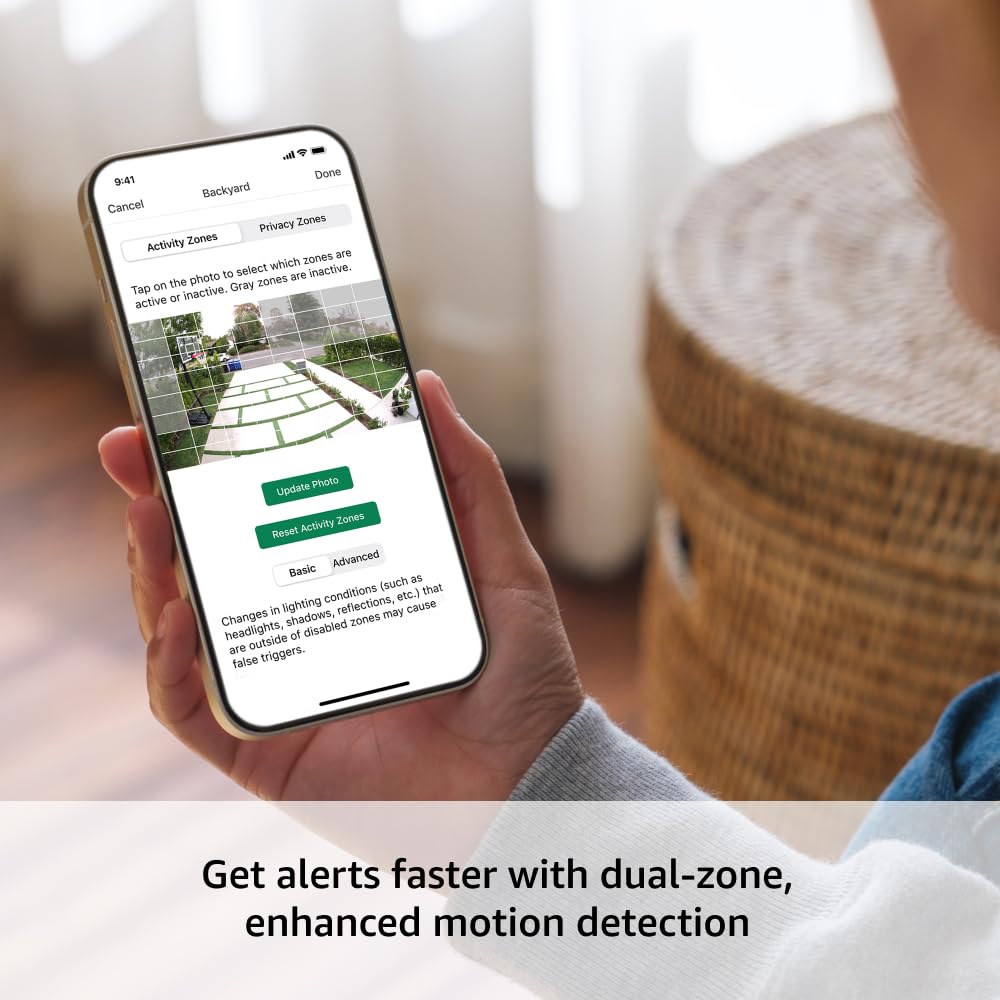
Workaround: Create activity zones (available in app) to ignore parts of the frame like streets or sidewalks. This helps but isn’t as effective as AI detection.
Alert Speed
Time from motion to phone notification: 3-8 seconds
This is acceptable but not instant. By the time I get the alert and open the app, the person has usually already reached my door. Premium cameras with faster processors deliver alerts in 1-3 seconds.
Alexa Integration: Seamless (As Expected)
Since Amazon owns both Blink and Alexa, integration is flawless.
What Works With Alexa
Voice commands I use regularly:
- “Alexa, show me the driveway camera” → Live view on Echo Show
- “Alexa, arm my Blink system” → Arms all cameras
- “Alexa, disarm Blink” → Disarms when I’m home
Automation possibilities:
- Auto-arm cameras when you leave home (geofencing)
- Disarm automatically when you arrive
- Trigger lights when motion detected
- Announce motion alerts through Echo speakers
My favorite automation: When the driveway camera detects motion between 6-8 PM (package delivery window), my Echo Dot announces “Motion detected at front door.” This alerts me to check for packages without constant phone notifications.
Echo Show Integration
If you own an Echo Show (smart display), the Blink Outdoor camera integration is fantastic:
- Live view displays automatically when motion detected (if configured)
- Tap camera name on Echo Show for instant live view
- Two-way audio works through Echo Show speaker/mic
- Picture-in-picture while watching other content
Compared to non-Alexa cameras: Ring (also Amazon-owned) integrates equally well, but Arlo, Google Nest, and others have delayed responses or require more complex setup with Alexa.
Weather Resistance: Tested in Extreme Conditions
The Blink Outdoor camera claims IP65 weather resistance. I’ve tested this claim through brutal conditions.
IP65 Rating Explained
IP65 means:
- 6 (Dust): Completely dust-tight, no particles enter
- 5 (Water): Protected against water jets from any direction (but NOT submersion)
Translation: The camera handles rain, snow, and dust but shouldn’t be submerged or pressure-washed directly.
My 8-Month Weather Testing
Temperature extremes:
- Coldest: -15°F (January Minnesota) — Camera functioned, battery drained 40% faster
- Hottest: 95°F (July direct sunlight) — No issues, normal performance
- Temperature rating: Blink claims 32°F to 113°F, but mine worked below that range
Precipitation:
- Heavy rain: Multiple 2+ inch rain events — Zero water intrusion
- Snow: Covered in 6+ inches of snow — Continued recording fine
- Ice: Freezing rain coating — Lens stayed clear enough for recording
Humidity: Minnesota summers are humid (80-90%). No condensation inside lens or housing after 8 months.
Direct sunlight: Mounted in location getting 6+ hours direct sun daily. No heat-related failures, housing hasn’t faded or cracked.
Weather-Related Issues I Experienced
Cold weather battery drain: Below 20°F, the battery drained noticeably faster (roughly 30-40% increased drain). This is normal for all lithium batteries in cold, not a Blink-specific issue.
Lens condensation once: On one extremely humid morning (90% humidity, rapid temperature change), the lens fogged internally for ~2 hours. Cleared on its own as temperature stabilized. Hasn’t recurred in 7+ months.
Wind: Strong winds up to 40mph haven’t affected the camera’s mount or positioning. The bracket stays secure.
Verdict: The IP65 rating is legitimate. This camera handles real-world outdoor conditions well for the price point.
Two-Way Audio: Works But Struggles
The Blink Outdoor camera includes two-way audio—you can listen and speak through the camera from your phone.
Audio Quality
Camera microphone (listening):
- Picks up conversations clearly within 10-15 feet
- Background noise (traffic, wind) can overwhelm voices
- Can hear delivery drivers saying “package for [address]” clearly
Camera speaker (talking):
- Maximum volume is loud enough to get attention
- Voice quality is understandable but robotic/compressed
- About 1-2 second delay from phone to camera output
Limitations I’ve noticed:
- ❌ Significant audio delay makes real conversations awkward
- ❌ Background noise like wind can make it hard to hear
- ❌ Speaker volume isn’t loud enough for very noisy environments
- ✅ Works fine for “Leave the package at the door” type communications
Compared to premium cameras: Arlo and Ring have noticeably better audio quality with less delay. The Blink’s audio feels like a “checkbox feature” rather than a premium experience.
Practical use: I use two-way audio 2-3 times per month for delivery instructions. It works adequately but isn’t something I rely on for actual conversations.
App Experience: Simple But Lacks Features
The Blink Home Monitor app has improved dramatically since earlier versions, but it still feels basic compared to competitors.
What I Like About the App
Simple, clean interface: Opening the app shows camera thumbnails with live view one tap away. No complexity, no learning curve.
Quick arming/disarming: Giant “Armed” and “Disarmed” buttons make system control effortless.
Activity zones: Draw zones on the camera view to ignore certain areas (like streets). Helps reduce false alerts.
Clip viewing (with subscription): Scrolling through saved clips is straightforward with date/time stamps.
What Frustrates Me About the App
No continuous live view option: Live view times out after 5 minutes automatically. For extended monitoring, you must keep restarting live view manually.
Limited customization: Can’t adjust video quality, bitrate, or compression settings. You get what Blink gives you.
Basic notification settings: Just “on” or “off” for notifications per camera. No “only notify between 6PM-8PM” scheduling.
No AI features: Zero object detection, person identification, or smart alerts.
Slower than competitors: Opening the app and loading live view takes 4-6 seconds. Premium apps load in 2-3 seconds.
According to TechHive, Blink’s app is “functional but bare-bones,” scoring 3/5 for features compared to Arlo (4.5/5) and Google Nest (4/5).
Who Should Buy the Blink Outdoor Camera?
After 8 months of real-world testing, the Blink Outdoor camera is perfect for specific buyers:
Buy Blink Outdoor Camera If:
You’re an Amazon/Alexa household: The seamless integration with Echo devices makes this a no-brainer. Voice control, Echo Show viewing, and automation work flawlessly.
Battery life is your priority: No other wireless camera comes close to 2-3 years on AA batteries. If you hate charging/changing batteries, Blink wins.
You need multiple cameras on a budget: At $100/camera (or $67/camera in multi-packs), you can afford comprehensive coverage. Plus Plan subscription ($100/year) covers unlimited cameras.
You want local storage option: The USB port for subscription-free local storage is rare and valuable.
You’re okay with “good enough” quality: For basic monitoring where you need to see “who’s there” without forensic detail, Blink delivers adequately.
You’re a renter needing temporary setup: Battery power + wireless = no installation damage. Take it when you move.
Don’t Buy Blink Outdoor Camera If:
You need premium video quality: The 1080p footage is compressed and lacks the detail of 2K cameras like Arlo.
You want smart AI detection: Blink can’t distinguish people from cars from animals. You’ll get many alerts.
You need instant alerts: 3-8 second notification delay isn’t suitable for time-sensitive monitoring.
You want color night vision: Infrared-only means no color details at night.
You need professional-grade evidence: For business security or legal documentation, invest in higher quality cameras.
The Verdict: Solid Budget Pick With Compromises
After 240 days of continuous testing in extreme Minnesota weather, my verdict on the Blink Outdoor camera is: It’s an excellent value for the price, with clear compromises you must accept.
What Blink Outdoor Camera Does Exceptionally Well:
⭐⭐⭐⭐⭐ Battery life: The 2-3 year battery claim is REAL. At 78% battery after 8 months, I’m on track for 3 years. This alone justifies the camera for many buyers.
⭐⭐⭐⭐⭐ Setup simplicity: From box to live viewing in 12 minutes. The easiest security camera installation I’ve experienced.
⭐⭐⭐⭐⭐ Alexa integration: Flawless voice control, Echo Show viewing, and automation. Amazon ecosystem users will love this.
⭐⭐⭐⭐ Weather resistance: Survived -15°F to 95°F, heavy rain, snow, and direct sunlight without issues. IP65 rating is legitimate.
⭐⭐⭐⭐ Value for multi-camera systems: At $67/camera in 3-packs, plus $100/year for unlimited cloud storage, it’s the most affordable comprehensive home coverage.
What Blink Outdoor Camera Compromises On:
⭐⭐⭐ Video quality: 1080p is adequate but heavily compressed. Fine for basic monitoring, not for detailed evidence.
⭐⭐ Smart detection: No AI means lots of alerts. Can’t distinguish between important motion (people) and irrelevant motion (cars passing).
⭐⭐⭐ Night vision: Infrared-only (black and white) works but can’t identify colors. No spotlight to deter intruders.
⭐⭐ Audio quality: Two-way audio works but has noticeable delay and mediocre sound quality.
⭐⭐⭐ App features: Basic functionality without advanced customization or smart features.
Final Rating: 4/5 Stars
The Blink Outdoor camera earns 4 out of 5 stars for delivering exceptional value with acceptable compromises.
Who gets 5/5 value: Budget-conscious buyers needing multiple cameras with minimal maintenance, especially Amazon/Alexa households.
Who should look elsewhere: Anyone needing premium video quality, advanced AI detection, or professional-grade surveillance should invest $100-150 more per camera for Arlo, Ring, or Google Nest.
My Personal Recommendation
I’m keeping my Blink Outdoor camera for secondary coverage (garage, side yard) where I need reliable motion detection and long battery life without premium quality requirements. For my primary entrance, I use an Arlo Pro 4 with 2K video and smart detection.
This hybrid approach works perfectly: Premium cameras where detail matters, Blink cameras for affordable comprehensive coverage.
At $100, the Blink Outdoor camera delivers 80% of premium camera functionality at 40% of the cost. That’s outstanding value IF you accept the compromises. Just don’t expect $200 camera quality at $100 prices.
Would I buy it again? Yes, for secondary coverage and multi-camera needs. Would I recommend it? Yes, with full disclosure of limitations. Is it worth the money? Absolutely, for the right buyer.
The 2-year battery life alone makes this camera remarkable. Combined with free local storage options and seamless Alexa integration, the Blink Outdoor camera earns its place as one of the best budget security cameras available in 2025.
FAQ: Blink Outdoor Camera
Does Blink Outdoor camera really last 2 years on batteries?
Yes! After 8 months of testing with moderate use (15-20 motion events daily), my Blink Outdoor camera battery is at 78%, projecting 3 years total battery life—exceeding Blink’s 2-year claim. Battery life varies based on motion events, temperature, and live viewing frequency. Heavy use areas might get 12-18 months, while quiet areas could achieve 3-4 years.
Do you need a subscription for Blink Outdoor camera?
No, the Blink Outdoor camera works without subscription using the free plan (live view and alerts only) or local USB storage ($15 for USB drive, zero monthly fees). However, for cloud storage and remote clip access, Blink Subscription costs $3/month per camera or $10/month for unlimited cameras. Local storage is best for budget-conscious users.
How is Blink Outdoor camera video quality?
The Blink Outdoor camera records 1080p video that’s adequate but heavily compressed to save battery. Daytime footage clearly shows faces up to 20 feet and identifies people, but license plates blur beyond 25 feet. Night vision is infrared-only (black and white) with 20-22 feet of usable range. It’s “good enough” for basic security but not premium quality.
Does Blink Outdoor camera work with Alexa?
Yes, Blink Outdoor camera integration with Alexa is excellent since Amazon owns both. Voice commands like “Alexa, show me driveway camera” work instantly on Echo Show devices. You can arm/disarm the system via voice, create automation routines, and receive motion announcements through Echo speakers. Best-in-class smart home integration for Amazon ecosystem users.
Can Blink Outdoor camera record without WiFi?
No, the Blink Outdoor camera requires WiFi for initial setup, live viewing, and cloud uploads. However, with local USB storage enabled, the camera can record motion clips to the Sync Module’s USB drive even if internet goes down, but you can’t receive alerts or view remotely without WiFi. The camera cannot function completely offline.
Is Blink Outdoor camera weatherproof?
Yes, the Blink Outdoor camera has IP65 weather resistance rating, meaning it’s dust-tight and protected against water jets. My 8-month testing in Minnesota included -15°F cold, 95°F heat, heavy rain, snow coverage, and direct sunlight—zero weather-related failures. The camera operates in claimed 32°F-113°F range, though mine functioned below freezing.
How far can Blink Outdoor camera detect motion?
The Blink Outdoor camera’s PIR motion sensor detects motion up to 26 feet according to manufacturer specs. In real-world testing, I get reliable detection to 22-24 feet for people walking directly toward the camera. Detection range decreases for motion at extreme angles or very slow movement. Large objects like cars trigger reliably at the full 26-foot range, while small animals (cats, squirrels) are inconsistent beyond 15 feet.
Can you use Blink Outdoor camera indoors?
Yes, the Blink Outdoor camera works perfectly indoors despite being designed for outdoor use. The weatherproof housing is simply extra protection you don’t need inside. I’ve used mine both outdoors (driveway) and temporarily indoors (garage) with identical performance. The only consideration: the matte black outdoor finish looks more industrial than Blink’s white indoor cameras, which blend better with home decor.
Final Thoughts: 8 Months Later
When I bought the Blink Outdoor camera eight months ago, I was skeptical of the 2-year battery claim and $100 price point. How could something this affordable actually work well?
The answer: By making smart compromises.
Blink sacrifices video quality, smart AI detection, and premium features to achieve exceptional battery life and affordability. For many users—especially those needing multiple cameras or living in Amazon/Alexa households—these are worthwhile trade-offs.
What surprised me most: The battery life claim is actually CONSERVATIVE. At 78% battery after 8 months of Minnesota weather and daily use, I’m on track for 3 years, not 2. This alone justifies the camera for anyone tired of constantly charging or changing batteries.
What disappointed me: The lack of smart detection. Receiving alerts for every car that drives past gets exhausting. Activity zones help, but AI-powered person detection (like Arlo and Ring offer) would transform the user experience.
Would I recommend Blink Outdoor camera to a friend?
Absolutely—with proper expectations. I’d say: “It’s not the sharpest video or smartest camera, but for $100 you get reliable motion detection that runs for years on AA batteries. Perfect for secondary coverage or budget multi-camera setups. Just don’t expect $200 camera quality.”
My personal usage going forward: I’m keeping my Blink Outdoor camera long-term for garage and side yard coverage. These locations need reliable motion alerts without premium video quality. For my front door (primary entrance), I use an Arlo Pro 4 with 2K video and smart detection.
This hybrid approach—premium cameras for critical coverage, Blink cameras for affordable comprehensive monitoring—delivers the best of both worlds without breaking the bank.
At 78% battery after 240 days, the Blink Outdoor camera has earned its place in my security setup. That’s the ultimate endorsement: I’m not replacing it, I’m adding more.
Rating: 4/5 Stars
Buy if: You want exceptional battery life, easy setup, and affordable multi-camera coverage Skip if: You need premium video quality, AI detection, or professional-grade surveillance